Fenty Skin: Adaptable Display
Fenty Skin: Adaptable Display
UX & Industrial Design | DMX Shopfitting
From problem framing to iterative design, informed by physical constraints and visual standards.
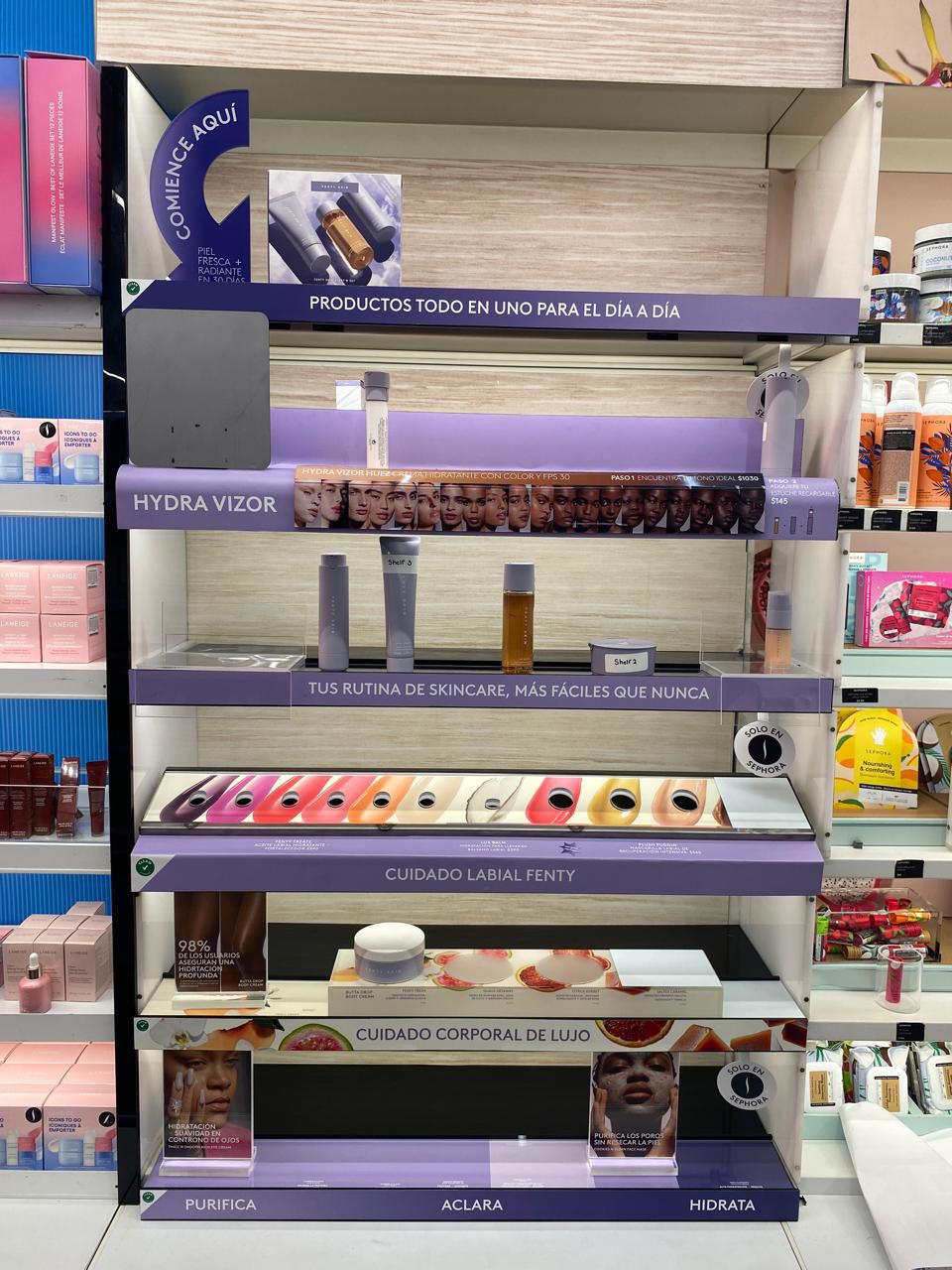
Adaptation of retail display pieces for Sephora stores.
Note: This is one example of several micro-projects I worked on at DIAM Shopfitting & Display, showcasing my approach to adapting design for production constraints.
Quick Overview
Context/ Framing
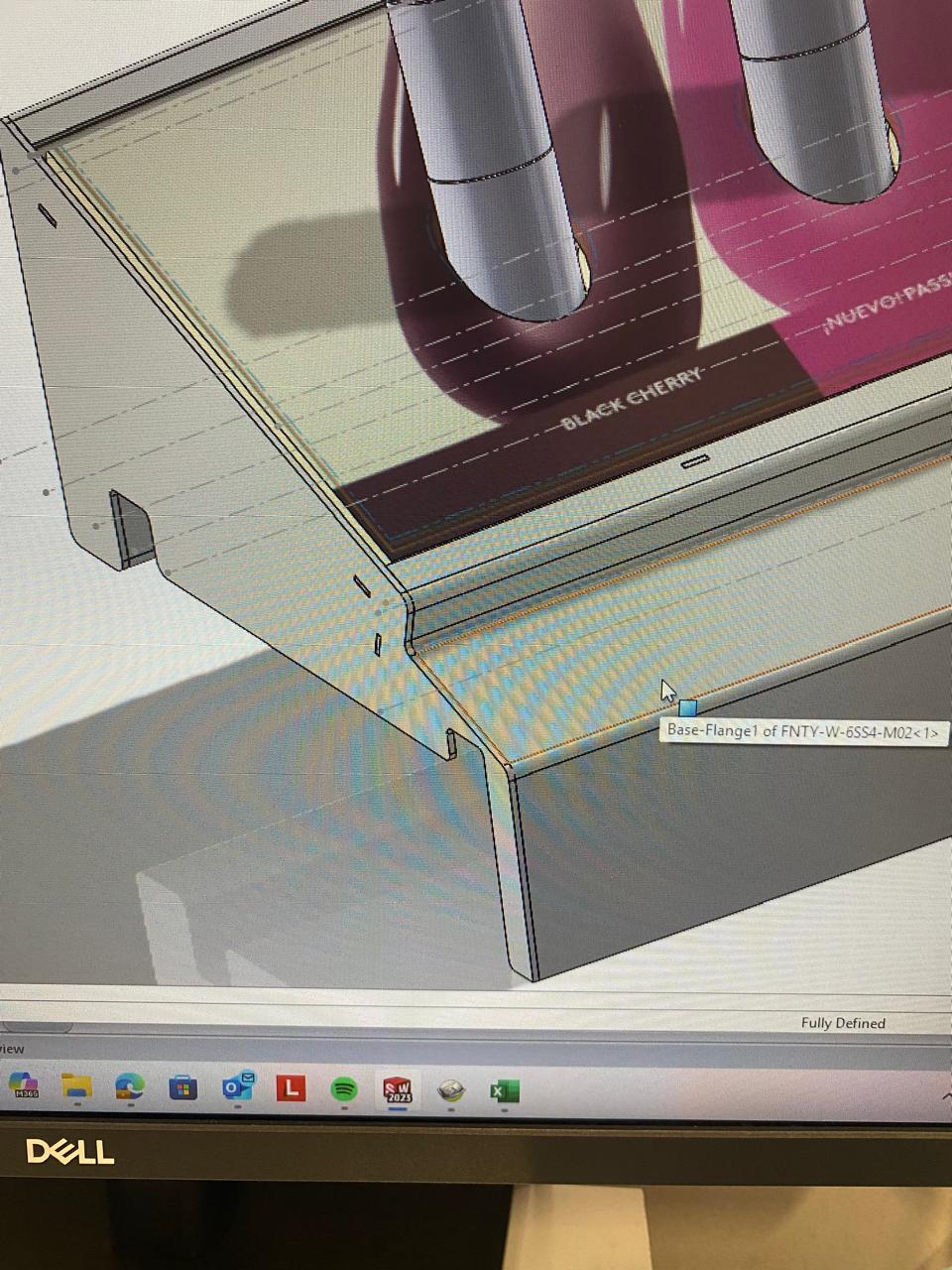
This project focused on the design of retail display structures for Fenty Skin in Sephora stores.The work required adapting designs sent from the New York headquarters (D3) to ~50 stores in Mexico, each with up to three different shelf versions, while maintaining visual consistency and functional integrity using acrylic and metal materials.
Context/ Framing
This project focused on the design of retail display structures for Fenty Skin in Sephora stores.The work required adapting designs sent from the New York headquarters (D3) to ~50 stores in Mexico, each with up to three different shelf versions, while maintaining visual consistency and functional integrity using acrylic and metal materials.
Research/Field Study
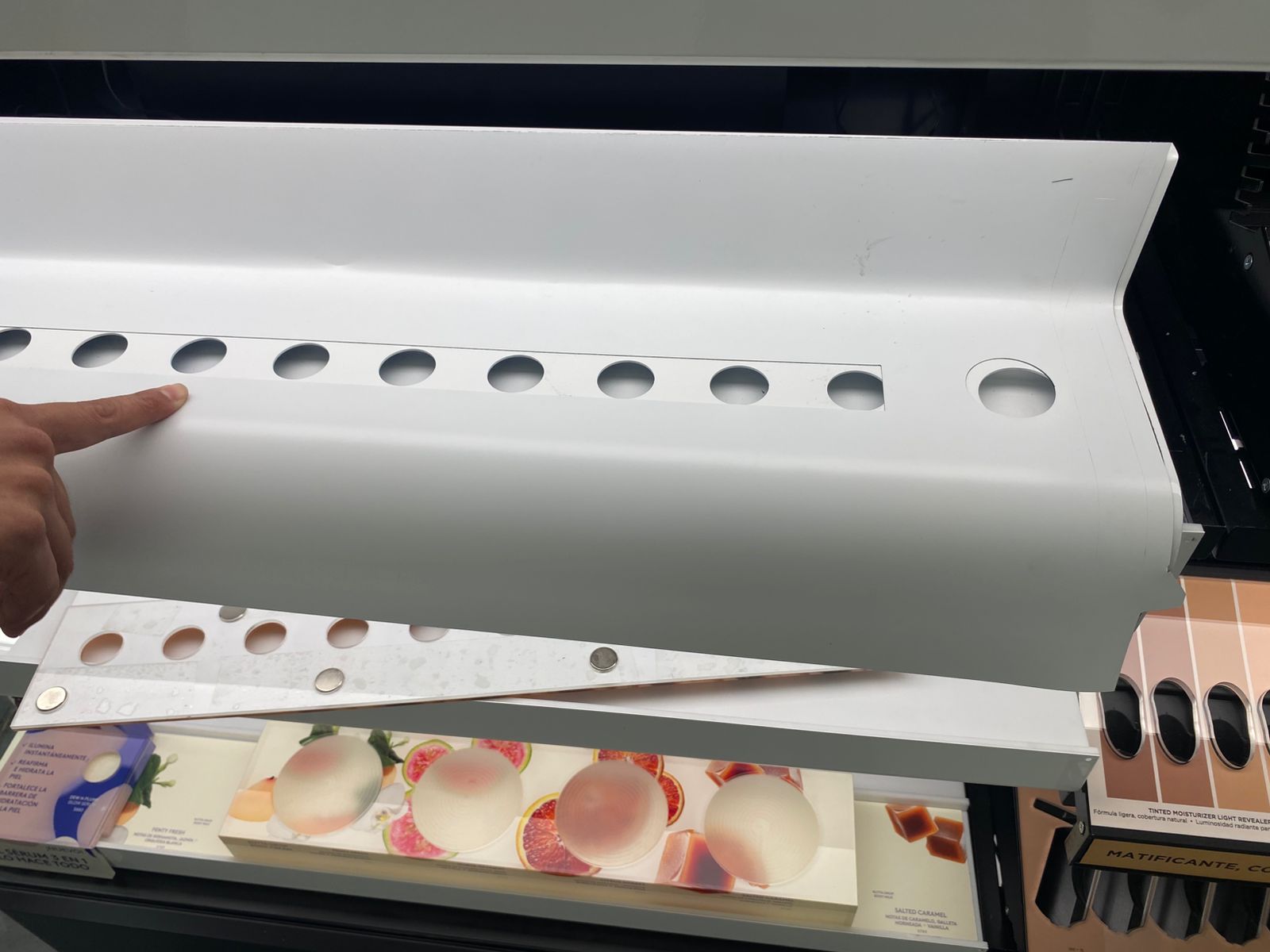
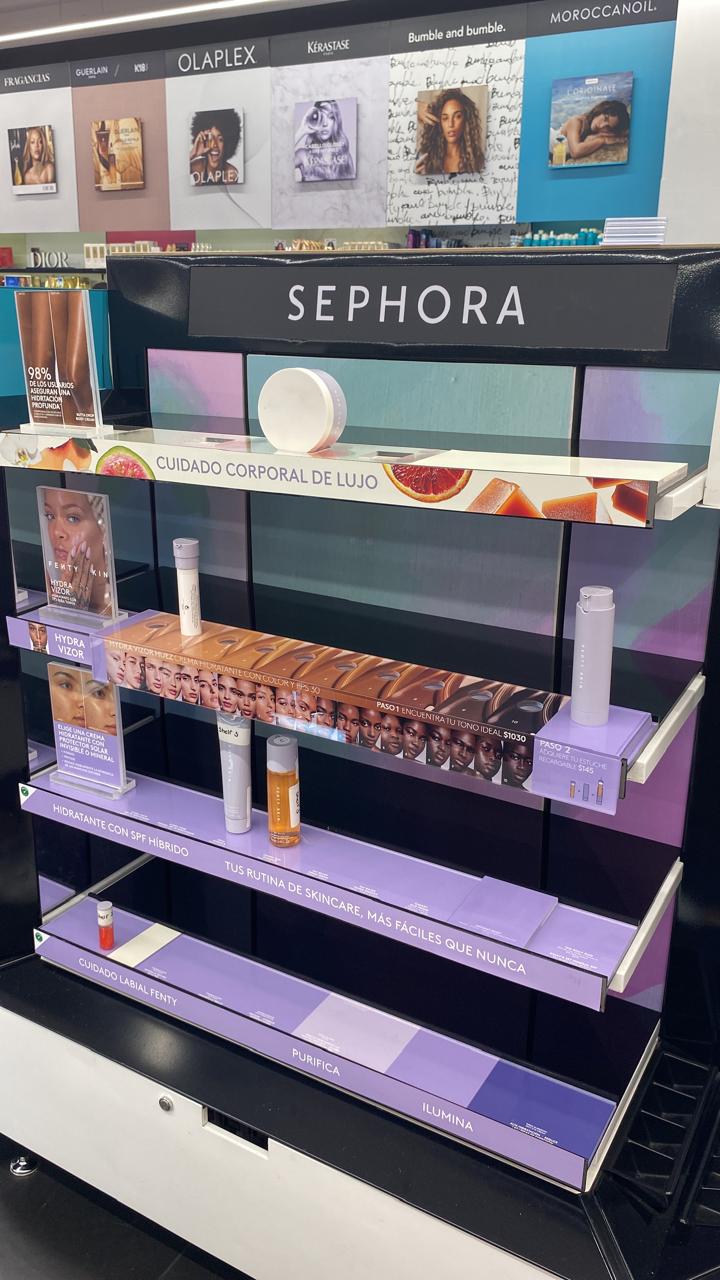
Field research was conducted in several Sephora stores in Mexico, including Antara, Mitikah, Portal San Ángel, and Manacar. Prototypes were tested on-site to evaluate how they fit on the existing shelf versions.
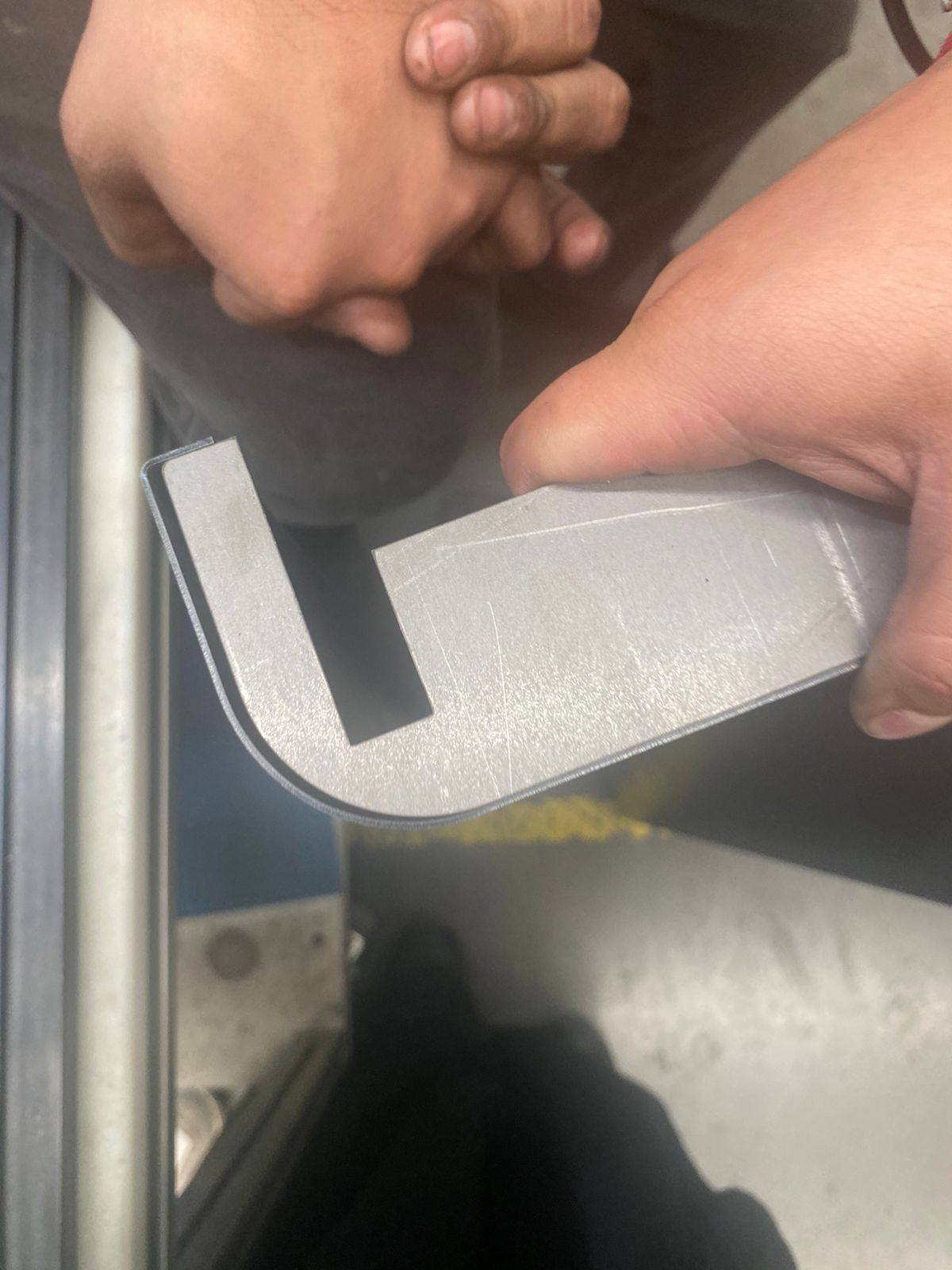
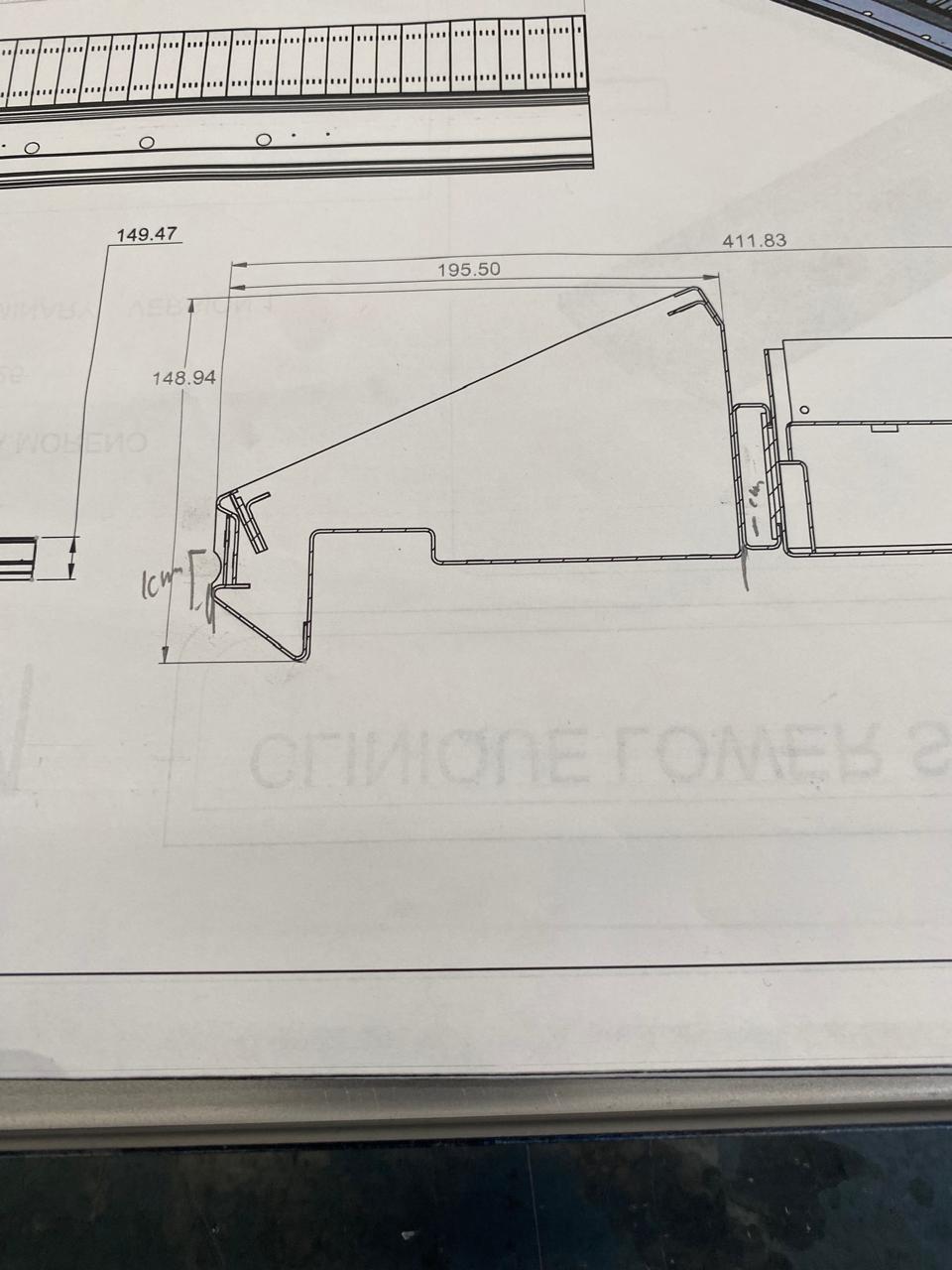
This study revealed that not all shelves shared the same measurements. Even millimetric variations required redesigning the displays to ensure a proper fit across all store formats, maintaining both functionality and visual consistency.


Research/Field Study
Field research was conducted in several Sephora stores in Mexico, including Antara, Mitikah, Portal San Ángel, and Manacar. Prototypes were tested on-site to evaluate how they fit on the existing shelf versions.
This study revealed that not all shelves shared the same measurements. Even millimetric variations required redesigning the displays to ensure a proper fit across all store formats, maintaining both functionality and visual consistency.
Research/Field Study
Field research was conducted in several Sephora stores in Mexico, including Antara, Mitikah, Portal San Ángel, and Manacar. Prototypes were tested on-site to evaluate how they fit on the existing shelf versions.
This study revealed that not all shelves shared the same measurements. Even millimetric variations required redesigning the displays to ensure a proper fit across all store formats, maintaining both functionality and visual consistency.
Core problem
Designing a retail display that could adapt to subtle but critical shelf variations across multiple Sephora stores, without compromising brand consistency, materials, or production feasibility.
Core problem
Designing a retail display that could adapt to subtle but critical shelf variations across multiple Sephora stores, without compromising brand consistency, materials, or production feasibility.
Key pain points
Shelf variations across stores
Impact: Display pieces did not fit uniformly.
Insight: Even millimetric differences required iterative adjustments.
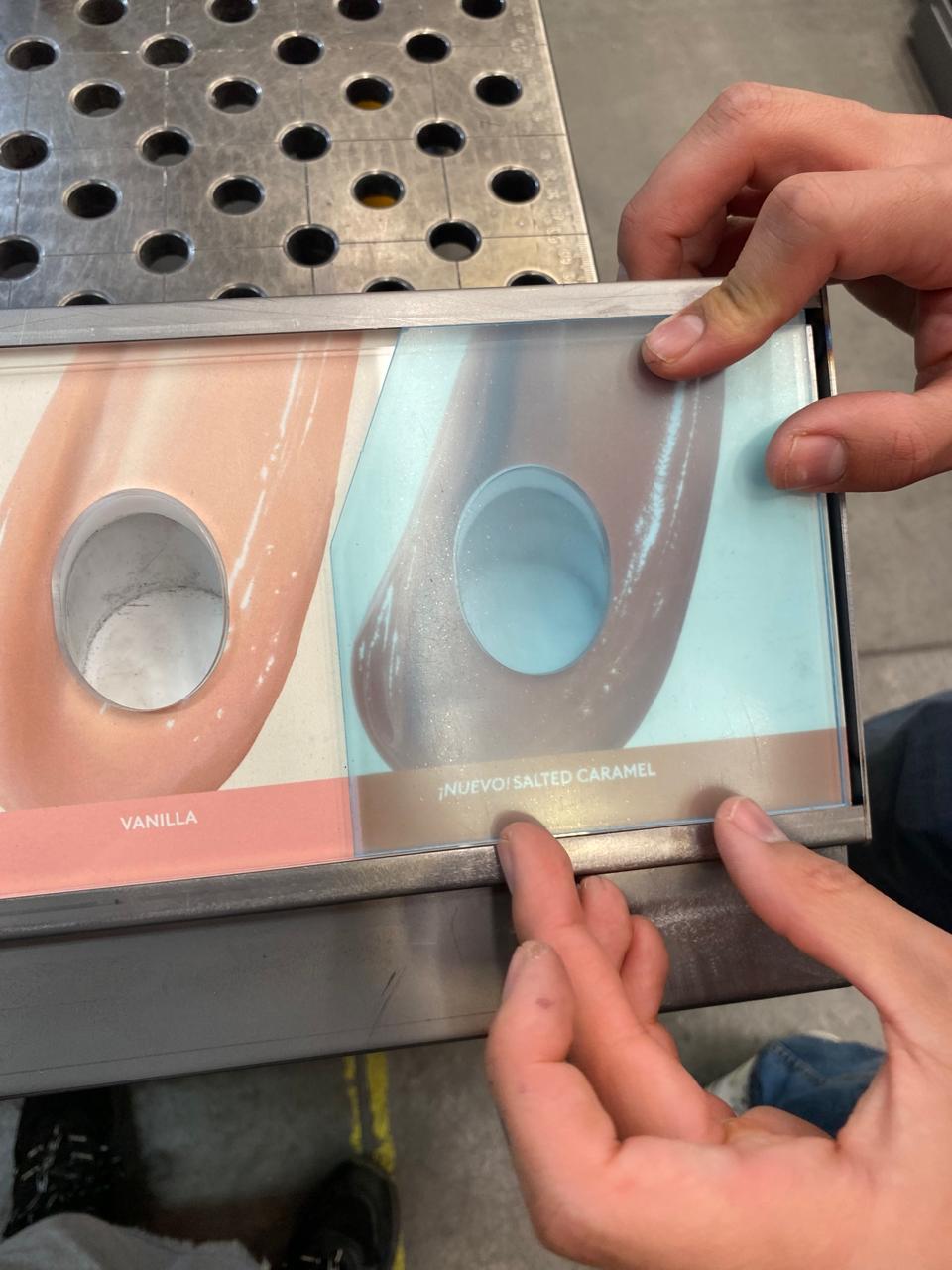
Graphic alignment on different shelves
Impact: Risk of misaligned branding.
Insight: Graphics had to be scaled and positioned precisely for each iteration.
Coordination with international design team (D3)
Impact: Potential miscommunication.
Insight: Clear documentation and proactive feedback were essential.
Material constraints (acrylic & metal)
Impact: Limited flexibility for adjustments
Insight: Had to balance structural integrity with adaptability.
Core Features
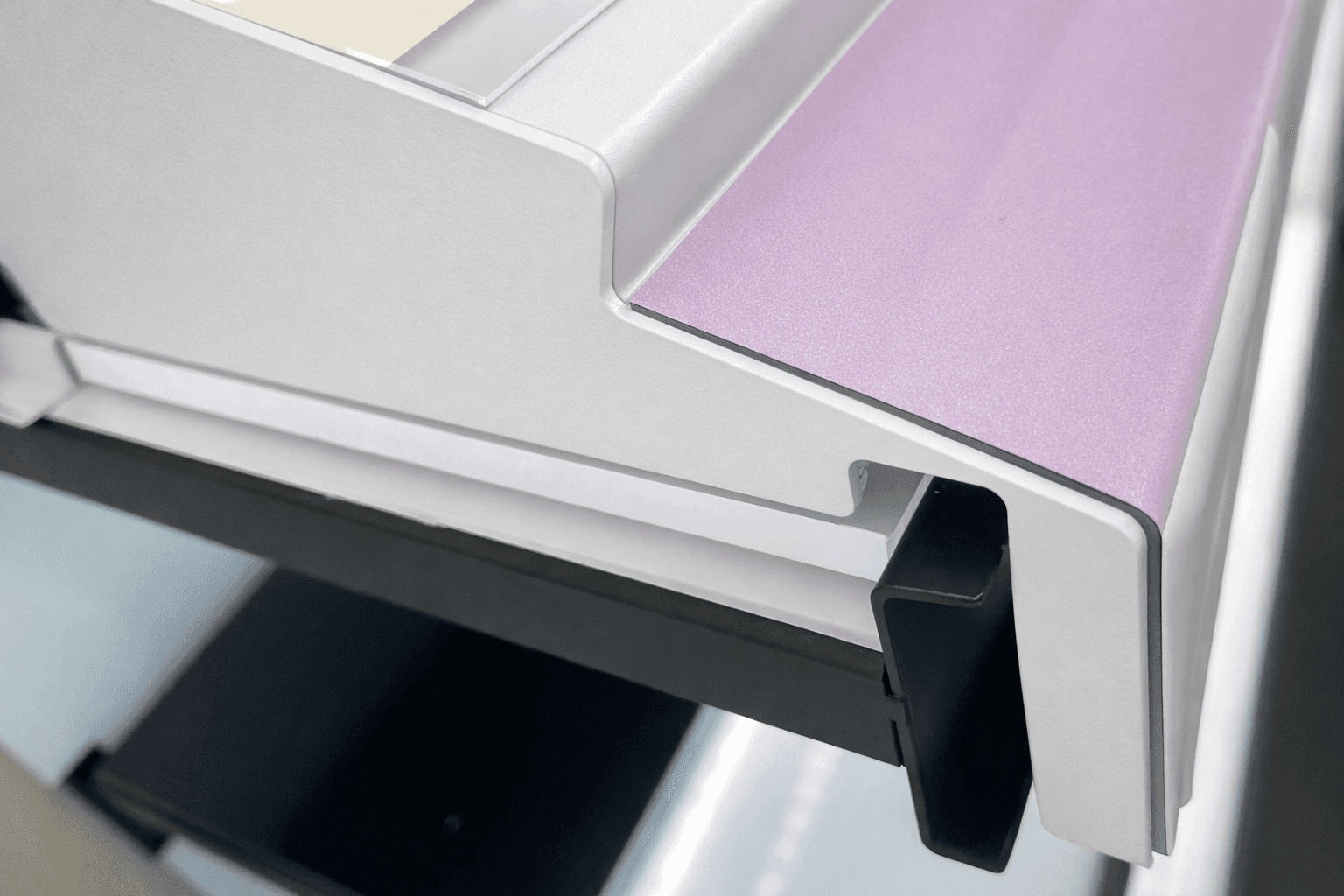
Adaptable assembly system allowing a single display to fit multiple shelf versions.
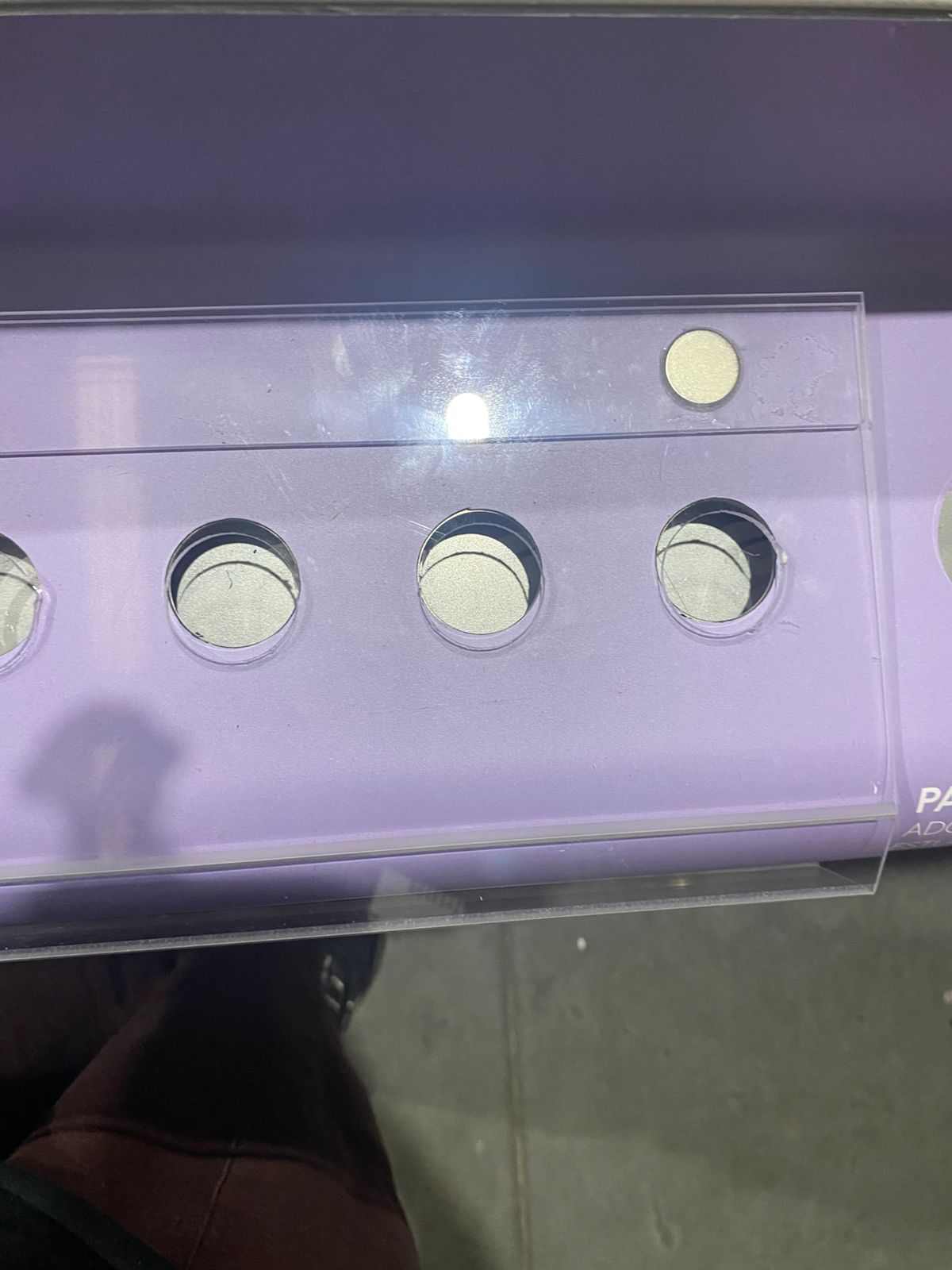
Built-in tolerance ranges across acrylic and metal components to prevent fitting failures.
Magnetic alignment mechanism designed to remain functional even with in-store movement.
Consistent graphic placement rules ensuring brand alignment across all iterations.
Core Features
Adaptable assembly system allowing a single display to fit multiple shelf versions.
Built-in tolerance ranges across acrylic and metal components to prevent fitting failures.
Magnetic alignment mechanism designed to remain functional even with in-store movement.
Consistent graphic placement rules ensuring brand alignment across all iterations.
Outcome
A flexible display design that could be installed across different Sephora shelf formats without compromising visual consistency or ease of assembly.
Skills strengthened
Translating international design concepts into solutions that work in local, real-world conditions.
Designing within tight material and production constraints while maintaining brand consistency.
Iterating directly in context, using on-site testing to inform design decisions.
Anticipating installation and usage issues before they become failures.
Balancing precision, tolerance, and visual clarity in scalable retail systems.
Outcome
A flexible display design that could be installed across different Sephora shelf formats without compromising visual consistency or ease of assembly.
Skills strengthened
Translating international design concepts into solutions that work in local, real-world conditions.
Designing within tight material and production constraints while maintaining brand consistency.
Iterating directly in context, using on-site testing to inform design decisions.
Anticipating installation and usage issues before they become failures.
Balancing precision, tolerance, and visual clarity in scalable retail systems.
What broke and why it mattered
Findings
Horizontal carousels weren't perceived as scrollable
Design decision
Reduced card width so adjacent cards are partially visible, making the swipeable pattern immediately legible.

Date carousel didn't read as interactive
Design decision
Adjusted the clip so the circle is clearly cut making the overflow intentional and the interaction obvious.

Expense screen was too overwhelming
Design decision
Expense categories were turned into collapsible cards, while the summary button was moved to the fixed bottom nav for constant visibility.

What broke and why it mattered
Findings
Horizontal carousels weren't perceived as scrollable
Design decision
Reduced card width so adjacent cards are partially visible, making the swipeable pattern immediately legible.
Date carousel didn't read as interactive
Design decision
Adjusted the clip so the circle is clearly cut making the overflow intentional and the interaction obvious.
Expense screen was too overwhelming
Design decision
Expense categories were turned into collapsible cards, while the summary button was moved to the fixed bottom nav for constant visibility.
Horizontal carousels weren't perceived as scrollable
During the session, none of the participants swiped the destination carousel horizontally. The card edges weren't visible enough to signal that more content existed beyond the frame.
Design decision
Reduced card width so adjacent cards are partially visible, making the swipeable pattern immediately legible.
Date carousel didn't read as interactive
The date selector used a circular element that got clipped at the screen edge. Participants didn't recognize it as something they could scroll.
Design decision
Adjusted the clip so the circle is clearly cut making the overflow intentional and the interaction obvious.
Expense screen was too overwhelming
The cluttered expense screen caused users to overlook the summary button, as all categories and fields were visible at once.
Design decision
Both expense categories were redesigned as collapsible cards, reducing visual noise and letting users focus on what's relevant.
The expense summary button was moved to the bottom navigation bar and highlighted in green, making it visible regardless of scroll position.